Understanding statute-barred debt is critical for Australian businesses that extend credit, issue invoices, or manage overdue accounts. In simple terms, statute-barred debt refers to a debt that is too old to be legally enforced through the courts due to limitation periods set by law. Missing a deadline can mean losing the legal right to recover a legitimate business debt.
Across Australia, most business and commercial debts are subject to a standard limitation period of six years, although this can vary depending on the type of debt, the state or territory, and whether a court judgment has been obtained. This article explains how statute-barred debt works, the key time limits by jurisdiction, and how businesses can act early to avoid recovery risks.
What Is Statute-Barred Debt in Australia?
Statute-barred debt is a debt that can no longer be recovered through court action because the applicable limitation period has expired. Limitation laws exist to ensure fairness, prevent stale claims, and encourage timely debt recovery while evidence and records are still available.
Each Australian state and territory has its own Limitation Act, but the principles are broadly similar nationwide. These laws set strict deadlines for commencing legal proceedings to recover unpaid debts arising from contracts, invoices, loans or services provided.
Several key factors affect whether a debt becomes statute-barred:
- Whether the debtor has made a payment or written acknowledgment.
- The type of debt (contract debt vs judgment debt).
- The state or territory where the cause of action arose.
- The date the debt became due.
If court action has not been started within the limitation period, no payment has been made during that time, and written acknowledgement of the debt has not been received from the debtor, the debt may become statute-barred.
However, limitation rules are complex, so businesses should always seek professional advice before assuming a debt is statute-barred.
Limitation Periods for Debt Recovery
For most commercial debts in Australia, the limitation period is six years from the date the cause of action arises. This generally applies to unpaid invoices, service agreements, and supply contracts.
It is important to distinguish between:
- Contract debts – usually limited to six years.
- Court judgment debts – often subject to longer limitation periods.
While most contract debts have a six-year limitation period across Australia, judgment debts typically have a 12 year enforcement period, extended up to 15 years in Victoria and South Australia.
When Does the Limitation Period Start?
Knowing when the clock starts is essential to understanding statute-barred debt risks.
Common starting points include:
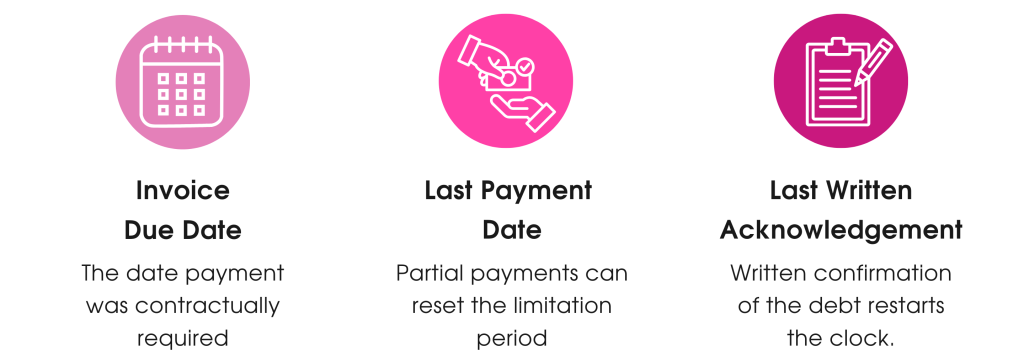
Resetting the limitation period
However, one of the most misunderstood aspects of statute-barred debt is how easily the limitation clock can be reset.
Common reset triggers include:
- Written acknowledgment of the debt.
- Part-payment, even a small amount.
- Entering a new payment arrangement.
Debtors may unintentionally reset a limitation period by:
- Sending an email admitting the debt.
- Agreeing to a payment plan.
- Making a goodwill payment.
Example of Timeline Resets
- An invoice issued on 1 March 2019 becomes due on 31 March 2019. The six-year limitation period usually starts from the due date.
- A debtor makes a small payment in June 2022. The limitation period restarts from that payment date.
- A debtor emails confirming they “intend to pay” the balance. This written acknowledgment can reset the statute-barred debt timeline.
These real-world scenarios frequently arise in commercial debt recovery.
What Happens When a Debt Becomes Statute-Barred?
When a debt becomes statute-barred, it does not disappear. The debt still exists, but it can no longer be legally enforced through court proceedings.
Key implications include:
- Creditors cannot start legal action after the limitation period expires.
- Courts will typically dismiss claims involving statute-barred debt.
- Debt collectors may still request payment but must not mislead or harass.
Reputable commercial debt recovery agencies usually stop legal recovery efforts once a debt is statute-barred. However, informal negotiations may still occur if the debtor is willing.
How Businesses Can Recover Debts Before They Become Statute-Barred
Early action is the most effective way to avoid statute-barred debt.
Internal reminders & statements
Regular account statements and automated reminders help keep debts active and visible.

Formal letter of demand
A professionally drafted letter of demand can prompt payment and demonstrate serious recovery intent.

Working with a commercial debt recovery agency
Specialist agencies understand limitation laws and can act quickly to preserve recovery rights.

Mediation options
Mediation can resolve disputes without litigation and prevent delays that lead to statute-barred debt.

Filing a court claim before the deadline
Commencing legal proceedings before expiry preserves the creditor’s rights even if the matter resolves later.

Statute-barred debt poses a real risk for Australian businesses that delay action on overdue accounts. Acting early, monitoring timelines, and understanding how limitation periods reset are essential to protecting recovery rights.
If you are unsure about your debt recovery timelines, speak with a commercial debt recovery specialist for tailored guidance.
Disclaimer: This article provides general information only and does not constitute legal advice. Businesses should seek independent legal advice for specific matters.